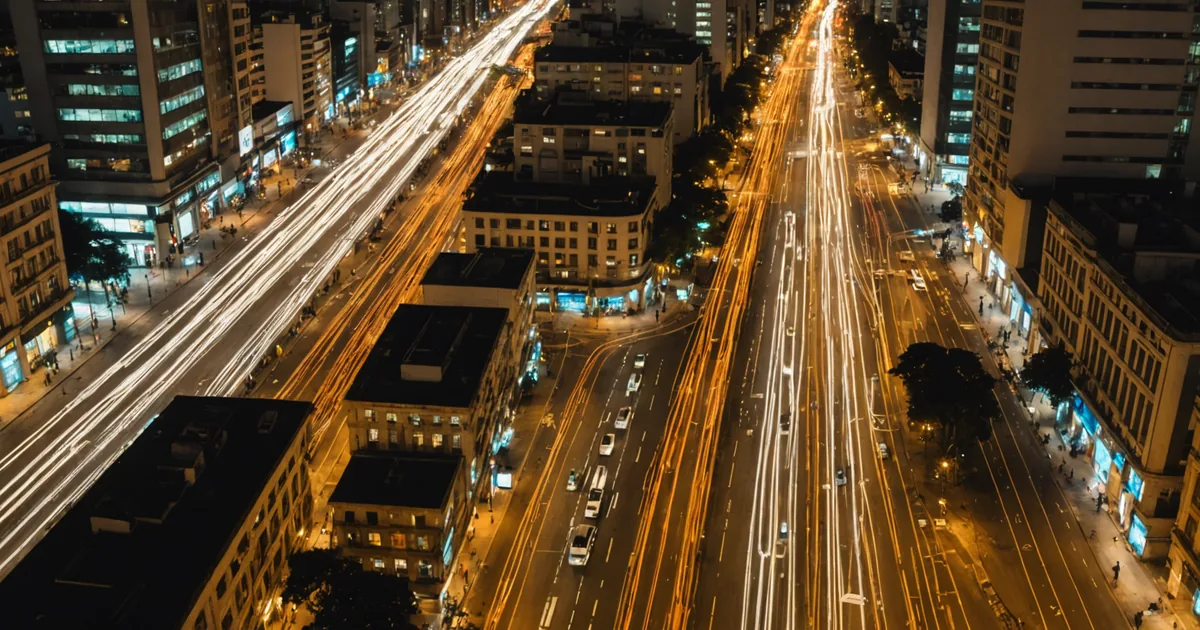
Every courier working in Sao Paulo has developed a mental model of when the money is good and when it is slow. Friday dinner rush, yes. Tuesday morning, probably not worth it. Rain, definitely yes if you can handle it. That intuition is real knowledge, earned through experience. But it is often imprecise in ways that cost money, because human memory tends to weight memorable exceptions rather than average patterns.
What we see in the delivery earnings data is that the gap between a well-timed week and a poorly-timed one is real and consistent. It is not dramatic in any single hour, but across five to seven days it compounds into a meaningful difference. This article walks through the patterns that show up most clearly, along with the honest caveats about what makes this harder to act on than a simple chart would suggest.
How order density and earnings interact
The metric that matters most is not total orders completed. It is net effective hourly income: what you actually earn per hour on the street, including dead time waiting for pickups, platform-imposed delays, and fuel or transport costs relative to distance traveled.
Order density drives this metric more than per-order value. A short-distance order that takes 12 minutes total beats a longer order that looks better on paper but involves 20 minutes of traffic. In dense commercial zones like Pinheiros, Vila Madalena, and Itaim Bibi, order density during lunch and dinner windows is high enough that turnaround time between deliveries is consistently short. In lower-density suburban areas, higher per-order rates do not always compensate for the time cost of reaching the next pickup.
The pattern in our early-access cohort's data is that couriers who stay within tight geographic zones during peak hours earn meaningfully more per hour than those who range widely. The platforms' own surge pricing tends to concentrate in these same zones during peak windows, which compounds the advantage.
Day-of-week patterns in the Sao Paulo metro
Looking at aggregated earnings patterns across our early-access group, Friday and Saturday evenings show the strongest per-hour outcomes for food delivery. This is the straightforward one that everyone already knows. What is less obvious is the mid-week pattern.
Wednesday evening in Sao Paulo tends to outperform Monday and Tuesday evenings consistently. The hypothesis is that midweek dinner orders spike because residents are deep enough into the week to want convenience but not yet in the weekend social pattern where they go out or cook more elaborate meals at home. Whether or not the hypothesis is right, the earnings pattern is real and repeatable across different periods in our cohort data.
Sunday mornings are an underutilized window for couriers willing to start early. Brunch and breakfast delivery volume in the higher-income neighborhoods of the zona sul and zona oeste tends to be meaningfully higher on Sunday than on weekday mornings, and platform competition among couriers is lower. This is a case where everyone knows the Friday dinner rush and competes hard for it, while the Sunday morning window is less contested.
Monday mornings are the weakest day for food delivery by a clear margin. If you are deciding where to concentrate effort in a five-day week, Monday morning is the period where the opportunity cost of doing something else is lowest.
Platform-specific timing considerations
The three major platforms do not all have the same peak patterns, partly because they serve different segments of the market and partly because their promoter structures are different. A note on scope first: what follows is based on patterns in our cohort's aggregated history and public knowledge of how these platforms operate. Individual results vary by zone, vehicle type, and the courier's specific platform standing.
iFood has by far the largest volume in Sao Paulo, which means its peak hours are more consistent but also more competitive. The platform's turbo bonuses tend to activate earlier in dinner hour than the others, which rewards couriers who are already in position and online before the peak hits rather than those who arrive after volume has ramped.
Rappi skews toward wealthier residential neighborhoods and has a stronger grocery and convenience component than iFood. The pattern here is that midday orders and late-night orders show higher average ticket values, because the product mix includes alcohol, premium grocery items, and electronics categories that iFood does not handle in the same way. Couriers with cargo bikes or motorbikes who can handle box-category items see different patterns than envelope-category food-only couriers.
Uber Eats in Sao Paulo operates at lower volume than the other two but with more consistent per-delivery rates and somewhat less volatility. The premium positioning means fewer surge moments but also fewer drops.
Weather: the variable everyone knows but underweights
Rain in Sao Paulo, particularly the afternoon rainstorms that are consistent from October through March, creates the single largest short-term earnings spike in courier income. The mechanics are simple: order volume increases because people do not want to go out, and the number of couriers willing to ride in rain drops sharply. Surge pricing activates on all three platforms within minutes of a significant rainfall event starting.
The difficulty is that riding in rain is harder and riskier, and that tradeoff is real. We are not suggesting that every courier should ride in heavy rain regardless of safety. What the data does show is that light-to-moderate rain, which does not meaningfully increase accident risk for an experienced courier, generates materially higher hourly earnings than the same time slot on a dry day. Couriers who are comfortable riding in rain and who start their shift during rainfall rather than waiting for it to stop capture the surge premium more consistently than those who respond reactively after the rain has already started to taper.
Planning versus reacting
The practical challenge with all of this is that shift timing decisions are made in advance, under uncertainty. You do not know on Tuesday whether Wednesday evening will be busy, or whether it will rain on Saturday. What you can do is use historical patterns to establish better priors about where to direct effort by default, and then adjust as real-time signals come in.
The difference between a courier who thinks about shift selection systematically and one who logs on whenever feels convenient tends to be around R$ 200 to R$ 400 per week in our cohort data, holding hours worked roughly constant. That is not a dramatic transformation in any single day. Across a month it is R$ 800 to R$ 1,600, which is not trivial at any income level.
A caution on optimization: chasing the highest-earning shift each week to the exclusion of everything else is not a sustainable strategy, and burnout is a real outcome we have seen with couriers who try to maximize every single hour. Consistent delivery activity across a reasonable weekly schedule, concentrated in the windows where it pays best, is a better target than periodic all-out efforts followed by days of rest.
The goal is not to work harder. It is to work the hours you were already going to work in the places and times where those hours pay best.